Archive
Grudge Match Review: “Scrooged” vs. “The Muppet Christmas Carol” vs. “Disney’s A Christmas Carol” – Rounds 1 – 5
There are so many adaptations of Charles Dickens’ A Christmas Carol, it would be impossible for me to review them all, not to mention the fact that I’m sure many of you who read this would be bored by the endless barrage of adaptations of the same tale. As luck would have it, though, I’ve already watched three drastically different adaptations of the story this month, all with their own strengths and weaknesses, and each very unique. Rather than split these up into three separate reviews, however, I decided to do something different for this review: a grudge match! After all, what is the Christmas season without a little conflict, right?
The three adaptations for this review are, as I said, drastically different in tone, style, medium, and even decade.

Scrooged is the least literal of the translations and also the earliest film in this grudge match. Starring Bill Murray, Karen Allen, Alfre Woodard, and several other big actors and celebrities from the 80s, it is also the most “adult” of the three adaptations.
Next is The Muppet Christmas Carol, which, as you may have guessed, is a Muppetized adaptation. What is surprising about this adaptation, the first Disney-produced Muppet production and the first film released son after Jim Henson’s death, is that it doesn’t strictly star any of the recently revived puppets in the lead role. Rather, Ebenezer Scrooge is instead portrayed by a rather famous human actor, Michael Caine, with the Muppets instead taking on roles as the supporting cast.
Finally, we have what is currently the most recent theatrical release version of the film and the only one to bear the original Dickens name, A Christmas Carol, another Disney production and their first to star Jim Carrey. Director Robert Zemeckis used the same motion capture techniques he used in his first Christmas adaptation/motion capture production, The Polar Express. The film also features the captured performances of Gary Oldman, Cary Elwes, Colin Firth, Bob Hoskins, and Robin Wright Penn. Coincidentally, despite its high tech trappings, big Hollywood names, and Disney’s involvement, this is also the most serious and literal adaptation of the three films.
What I want to do here, though, is to breakdown the various aspects of the basic Christmas Carol story, from the roles and the actors, the presentation of the ghosts, the artistic styling, the music, the overall effect of each of the films’ presentation of the Christmas Carol message, that all time classic one about charity and compassion for others, and, of course, the overall quality of each film as a whole. Instead of addressing each film on its own, I will pit each of these films against each other in the various categories, and each category will have a definite winner. The final reviews, however, do not necessarily reflect an average of each category’s results, and are to be considered my final score for each film overall — effectively determining the winner, you might say!
I must add this disclaimer: I’ve committed the sacrilege of having never read the original story, so I apologize for my ignorance on this likely crucial bit of research on my part. Hehe… *ahem* Read more…
10 Movies That Have Made Me Cry (…or at Least Tear Up): 5 – 1
<< PART I – Entries 10 – 6
 Here I continue to explore the final five of ten films that have made me cry… or at least tear up at certain points. While I cannot guarantee that they will make you cry, these have and definitely will continue to have the same effect on me that they did the first time around. And while this is not a definitive list, this half of the list does contain the one definitive film that will always get me choked up whenever I sit down to watch it, so read on through if you’re looking to see a grown man cry. That is, if you can see through your own tears, of course. Read more…
10 Movies That Have Made Me Cry (…or at Least Tear Up): 10 – 6
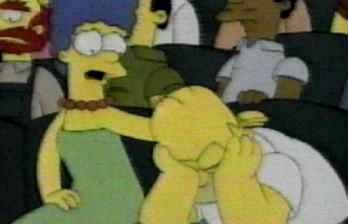 I recently watched the movie Radio for the first time. I was told that it could possibly make me cry by several people before, and the movie had been sitting in my Netflix queue for quite a while, though I hadn’t watched it because, let’s face it, who wants to just watch a movie that will just make you cry? But then, I sometimes am that person. I thought to myself, “You know, after watching The Walking Dead, I could really use a movie like that.”
It wasn’t that the episode of The Walking Dead I had just watched was just particularly grim, or anything, but I felt like watching something emotionally uplifting and inspirational. Radio seemed to fit that bill, and so I threw it on and… nothing. Nothing came out. Sure, it had a few recognizably tear-worthy moments but, overall? Nothing. Not even tears of joy. I was profoundly disappointed.
Am I the only one who wants to have these emotional outbursts with movies sometimes? I wasn’t sad. I wasn’t depressed. I wasn’t extraordinarily tired. I just wanted to watch something profoundly, emotionally true. Unfortunately, Radio is just not that great of a movie to begin with. And while I don’t normally find myself crying at movies, I doubt that I’m a cold, emotionless jerk. Afterall, there have been more than a few movies that have gotten me to that breaking point — even ones that aren’t particularly good, come to think of it. (Man… did Radio just suck that much?)
So, I submit to you this list. A list of ten movies that, in some way or another, have made me either cry or, at the very least, tear up consistently. Watch these movies, and I dare you to not feel emotionally touched, at least at some point during the movie. (Also, I’m apparently a very sensitive man, so please be nice…) Read more…
Fifteen Minute Freewrite #2… in 3D
So, Disney has just announced that they’re going to be releasing even more 3D conversions of classic films in the coming years, thanks in large part to the success of The Lion King in 3D the past few weeks. As of this writing, the film is still in the #3 spot at the box office, though for two weeks or more it held the top spot, and it’s likely to set the home market on fire again thanks to today’s Blu-Ray release.
What’s particularly astounding is that this is both good news for animated films of the 2D nature and also, possibly, a good sign for 3D films. While Sony has announced plans to charge audiences yet another premium for using the glasses starting in February, Disney has found another way to convert 3D film tickets into money by converting their older films. Re-releasing movies in theatres is hardly a new thing, especially for Disney, but charging a premium probably seems counterproductive. The Lion King would beg to differ.
Sony must be nuts if it thinks charging more for unproven films that are made in 3D. Disney’s re-releases of Finding Nemo, The Little Mermaid, Monsters, Inc., and Beauty and the Beast (already on Blu-Ray and about to be released in 3D on the home market, too!) have already proven to be classics that everyone loves, so it makes sense that Disney would follow the success of The Lion King with these four films.
Then again, the first two Toy Story films didn’t do so hot when re-released in 3D, and that was building up to the surefire hit Toy Story 3, which was simultaneously released in 3D and performed under expectations. That the first two films’ performances convinced Disney to hold off on re-releasing Beauty and the Beast in 3D around the same time just confuses me, though it’s plausible that the apparently poor translation into 3D that they did on those films has been updated using the newer conversion tech they used on The Lion King, and I’ve already heard good things about it at a test screening.
I write all this to say… I have no idea what’s going on. I do have to clock back in, however…
The Viewer’s Commentary: Coming Attractions
 Hello everyone! I just wanted to thank you all for this past week. I’ve been figuring out scheduling and, while still quite a bit shaky, I am of course going to keep the articles coming. I’ve got some big things planned, but haven’t had much time to do it all thanks to a birthday party, church, and work, but I figured, in the spirit of cinema, that I would give you all a set of previews for some upcoming attractions I have coming that I’m really excited about!
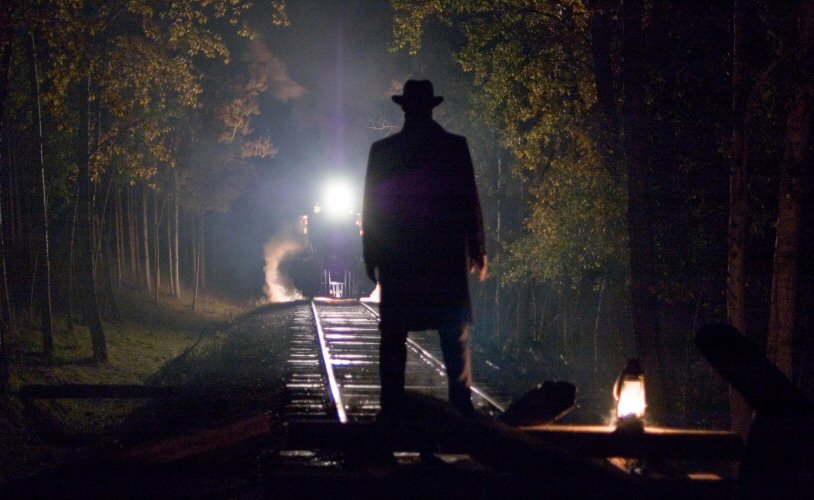
REVIEWS – I’ve seen a few films this past week that I’m eager to get reviews of. One of them still in theatres, one of them well into its senior years, and two that are just now starting to toddle around. … Okay enough with the age analogies. Want some hints as to what these movies are? Well, the first one involves an epidemic so epic, I can list at least 8 major actors by name who appear in the film and still not touch on the number of people involved. The oldest film I plan on reviewing is actually a recently released Blu-Ray involving a pachyderm who rises to the big top. Hint hint… As for the other two, one is a fictional account of the assassination of a legendary outlaw, and the other revolves around a couple determined to be together despite a cosmic, all knowing bureaucracy. Hope you like variety! I’ve also got reviews of the Blu-Ray editions of The Empire Strikes Back and Return of the Jedi lined up – the discs are literally sitting in my living room waiting to be watched, and my eagerness to get to other movies is definitely going to motivate me to get those watched.
 PIXAR IN REVUE – While this is primarily a prelude to a feature I’ve been planning to do since long before this site was even registered, I will be going through each of the major Pixar works, from the first shorts to Toy Story in 1995 to their recent and hopefully brief flirtation with pure commercialization in Cars 2, and then to infinity and beyond. All that will lead up to my most ambitious idea yet…
WALT DISNEY FEATURES: THE FEATURE – Similar to what I’m doing with Pixar, I will continue to express my love of animated films by going over each of the 51 Disney animated features and take a look at some upcoming works and related works. This one will take me the longest to do, so it will likely become a weekly-at-least type of feature, while I try to not only review and opine on the films, but also hopefully provide some historical context for each of the films, pertaining to not only Disney, but animation and even the world. I plan on doing an overview of each film as a primer before setting out to look at each on an individual basis. This is going to be quite difficult, especially since I plan on continuing work on other films, too, but I’m up for the challenge and I’m really looking forward to tackling this the most!
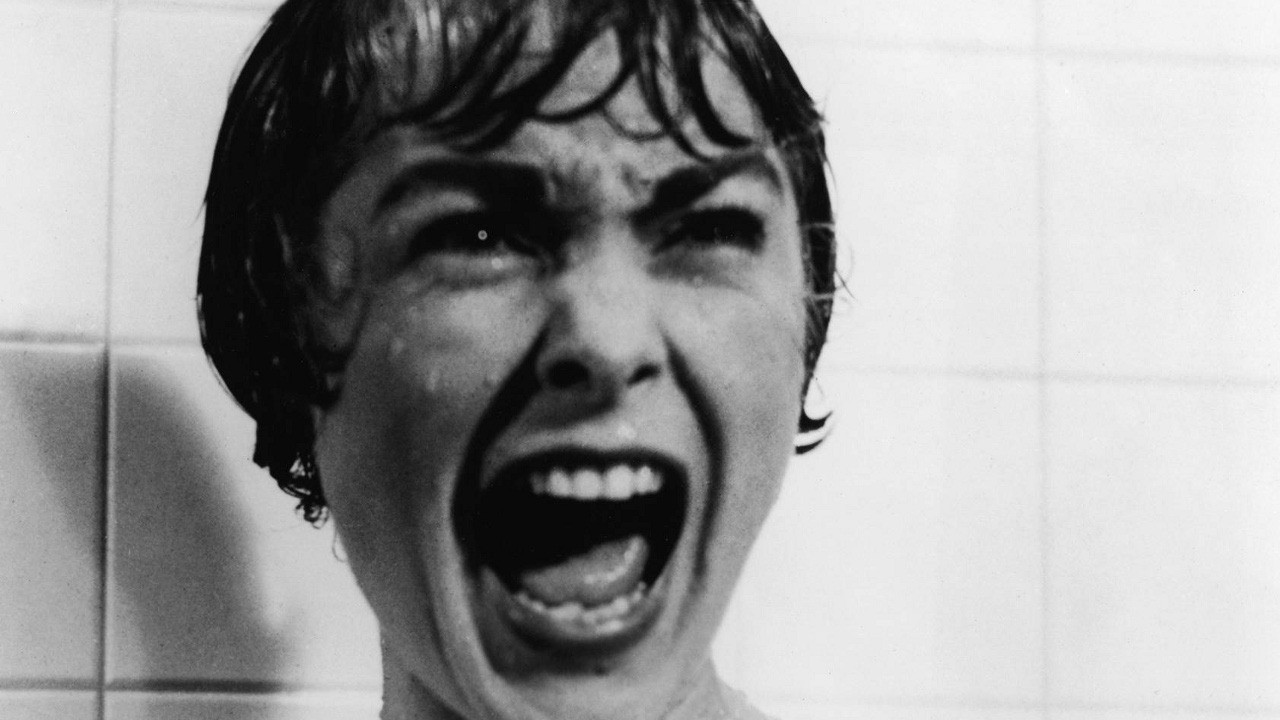 HORROR FILM MONTH – As always, October is going to be the month I begin focusing on horror films. This year, I’m planning on getting in touch with some of the more famous horror films I’ve always managed to avoid (A Nightmare on Elm Street, Halloween) while going over a few of my favorites, such as 28 Days Later, The Sixth Sense, Alien, and Psycho.
LISTS – Not so much a special thing I’m planning on doing as much as it is a regular feature I plan on doing, many of you may already know that I’m big on Top 10 lists, so expect me to fan the flames of discussion and discord while I make arbitrary lists of films and film-related things!
It’s about to get serious, and I appreciate both my friends and family who come here to support me as I indulge in my interests publicly and all of you who may possibly pass by this blog and find something worth your attention. I am but one man, but I do hope I can meet not just my own expectations, but yours too, and, again, I appreciate any support I get!
Thanks again everyone! I hope you are all as excited as I am!
An Ode to Pooh: Melancholy Ramblings on the State of Hand-Drawn Animation
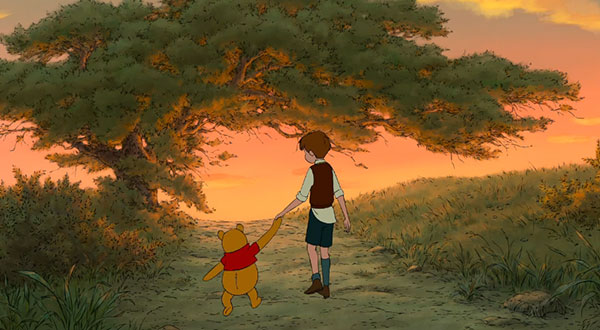
Pooh and Christopher Robin head off into the sunset.
It’s the question on the lips of every animation buff’s lips: Is hand-drawn animation on its way out? Let me get this out of the way, as you likely already know my perspective on the matter: I certainly hope that it isn’t.
As of this writing, I’m eagerly anticipating the release of the Blu-Ray release of Disney’s 70-year-old classic Dumbo, a movie I haven’t seen in probably over a decade — I can’t even remember the last time I did see it, in fact! But outside of film, animation, and Disney uber-fans, is there any truth to former Disney dictator Michael Eisner’s supposition that, much like black and white movies, these movies no longer appeal to general audiences? Read more…

 The Viewer's Commentary