Archive
Review: “It’s a Wonderful Life”
 Directed by: Frank Capra
Produced by: Frank Capra
Written by: Frances Goodrich, Albert Hackett, Jo Swerling, Frank Capra (screenplay)
Cinematography by: Joseph Walker
Editing by: William Hornbeck
Music by: Dimitri Tiomkin
Starring: James Stewart, Donna Reed, Lionel Barrymore, Henry Travers, Frank Faylen, Ward Bond, Beulah Bondi, Joseph Kearns
Year: 1946
Based on the short story The Greatest Gift by Philip Van Doren Stern
It’s almost impossible for me to hear the term “life-affirming” without thinking of something cloying or preachy. One of the few exceptions to this rule, however, is It’s a Wonderful Life — a film that, though undoubtedly now a Christmas season classic, is also a truly profound answer to the questions that may rise up as we go through life and its inherent trials. Read more…
Review: Tim Burton’s “The Nightmare Before Christmas”
 Directed by: Henry Selick
Produced by: Tim Burton, Denise Di Novi
Written by: Caroline Thompson, Michael McDowell (screenplay); Tim Burton (story)
Cinematography by: Pete Kozachik
Editing by: Stan Webb
Music by: Danny Elfman
Starring: Danny Elfman, Chris Sarandon, Catherine O’Hara, William Hickey, Glenn Shadix, Ken Page
Year: 1993
Aren’t you glad that emo culture is on its way out? (Or is that fad already dead? I can’t really tell. Not in school any longer. I hope it is.) I remember this one emo kid in my high school, a couple grades below me, who went by the name of “Jack.” I put that in quotations because, as it turns out, his name wasn’t actually “Jack.” I honestly don’t remember what his name was, but I do remember how stupid I felt once I learned that his name actually wasn’t “Jack,” as I had come to believe, and that he had chosen this false name based on the lead character from The Nightmare Before Christmas.
Special Review: “Miracle on 34th Street” (1947) – A Gradual Epiphany
 Directed by: George Seaton
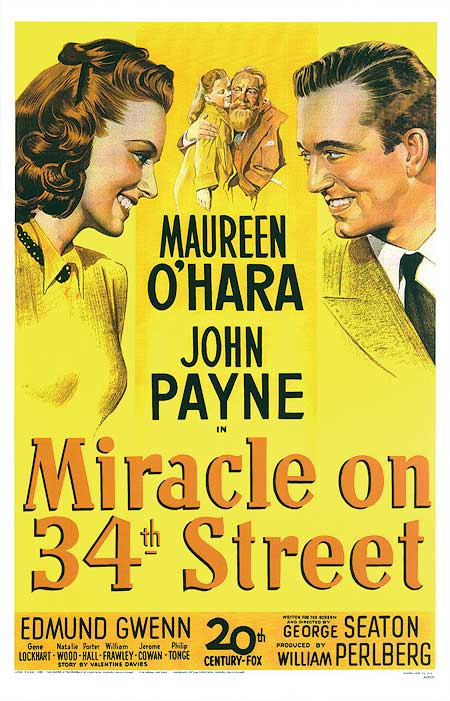
Produced by: William Perlberg
Written by: George Seaton (screenplay)
Cinematography by: Lloyd Ahem, Charles G. Clarke
Editing by: Robert L. Simpson
Music by: Cyril Mockridge
Starring: Maureen O’Hara, John Payne, Natalie Wood, Edmund Gwenn, Porter Hall, Gene Lockhart
Year: 1947
I have never believed in Santa Claus. My parents were pretty much of the same opinion regarding Santa as Maureen O’Hara’s character, Doris Walker, is in this film: Why lie? My younger sister, too, never believed, though it was more through my own efforts to “ruin” things for her as the older brother than any discouragement on my parents’ part. (I also ruined the Easter Bunny and Toothfairy for her, which makes her interest in the film Rise of the Guardians somewhat ironic, if not a result of some deep-seated resentment for having never believed in fairy tales — though I may be over-analyzing here.) So we basically grew up only understanding these figures as mythical characters, understanding that many other kids believed in these myths and that we shouldn’t ruin it for them, but never comprehending exactly how someone could. Read more…
Special Review: “Psycho” (1960) – Analysis Through Freewrite
 Directed by: Alfred Hitchcock

Produced by: Alfred Hitchcock
Written by: Joseph Stefano (screenplay)
Cinematography by: John L. Russell
Music by: Bernard Herrmann
Starring: Anthony Perkins, Vera Miles, John Gavin, Martin Balsam, John McIntire, Janet Leigh
Based on the novel Psycho by Robert Bloch
Year: 1960
Here’s something I’m going to have to admit, up front: Psycho is going to be hard for me to review. That I’m even writing this review is kind of intimidating to me, as I’ve always recognized it as a good film, but never really could pin down what it was that made me think this. I don’t find it all that terrifying, and the symbolism that others find laced throughout the film is not all that obvious to me. I’m not even all that impressed with the once-visceral nature of the violence. It’s hard to really analyze a film that I don’t fully comprehend my feelings for, and yet I feel oddly drawn to it, nonetheless. It’s not like the film digs into the inner depths of who I am and touches some emotional nerve with me, and yet I know that I’m relating to something in the film that still seems compelling, all the same. Because of this, please consider this “review” an exercise in exploring my own feelings towards this classic in what is basically a formalized freewrite. (I will avoid retreading over all the same important plot points that so many more qualified people have, as a result.) Read more…
Review: “Batman” (1989)
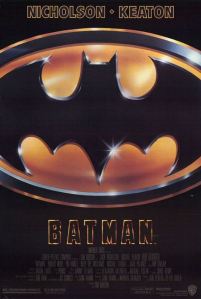 Directed by: Tim Burton

Produced by: Peter Guber, Jon Peters, Benjamin Melniker, Michael Uslan
Written by: Sam Hamm (screenplay, story), Warren Skarren (screenplay)
Starring: Michael Keaton, Jack Nicholson, Kim Basinger, Michael Gough, Robert Wuhl, Pat Hingle, Billy Dee Williams, Tracey Walter, Jack Palance
Music by: Danny Elfman, Prince (songs)
Year: 1989
Many may be aware of the fact that Batman hasn’t always been the Dark Knight we know and love today. The Adam West portrayal of the character is quite well known to even younger fans who may not have even seen an episode of the show. But what many may not know about this incarnation of the character was just how pervasive it was in the public’s eye well into the 1980s, and unless you were a fan of comic books, the general public didn’t catch on to the character’s grimmer revamps that started in the 70s thanks to the show’s continuation in TV syndication. Read more…
Review: Groundhog Day
 Director: Harold Ramis

Produced by: Trevor Albert, Harold Ramis
Written by: Danny Rubin (also story), Harold Ramis
Starring: Bill Murray, Andie MacDowell, Chris Elliott
Music by: George Fenton
Year: 1993
Terrible romantic comedies are a dime a few dozen, and it’s a shame that some rather wonderful love stories get thrown out with the rest of the trash just because they happen to be humorous movies that also are about love. But there is one standout that I have to say transcends even some of the best romantic comedies out there – one particular movie that just so happens to take place on a particular February holiday that people across the nation pay way more attention to than it really, quite honestly, deserves… I am, of course, talking about Groundhog Day. Read more…
Grudge Match Review: “Scrooged” vs. “The Muppet Christmas Carol” vs. “Disney’s A Christmas Carol” – Rounds 6 – 10
<< Part I
Round 6: The Ghost of Christmas Yet to Come
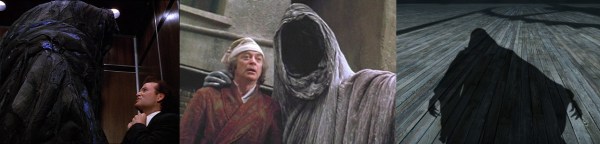
- Robert Hammond (uncredited), Robert Tygner (performer), and, yes, Jim Carrey as The Ghost of Christmas Future

Easily the ghost most people remember, and also the one where almost nobody seems to deviate from the tradition — not even Scrooged. The cloaked figure known as the Ghost of Christmas Yet to Come (alternately, of Christmas Future) is often seen as the most dramatic of the spirits, revealing to Scrooge how the future could turn out if he doesn’t change his ways. There are differences in how each movie portrays the spirit, of course, but ultimately, the horrific aspect is the same, and it’s only a matter of how horrific and in what way.
Scrooged, for instance, keeps with the thematics, with the ghost having a heavy, ghoulish cloak with blue streaks and a TV screen for a face that flashes static and images from Frank’s life. Inside his cloak are hellish ghouls, moaning in agony. The visions of the future he shows Frank are abstract and look completely unlike anything else in the film, showing a bleak and sterile future, free from passion and compassion.
The Muppets keep it grim and faithful, but they are sure to make sure that families who show this to their children will not have tears by the end of the film. And, ultimately, that’s okay. It doesn’t break out into song, it doesn’t speak, and it certainly isn’t the most joyful spirit in the world, but we do need a Christmas Carol adaptation that is faithful without being both syrupy sweet and cheaply made. This spirit didn’t make that much of an impact on me as a viewer, but I get that I’m not necessarily the intended audience here.
Of course, it’s remarkably clear that Disney and Zemeckis were aiming for a much older audience with their collaboration on A Christmas Carol, as the ghost maintains his scary nature, multiplied by ten, with only Jim Carrey’s performance to keep things a bit lighter. Not nearly concerned with being grim and more concentrated with being terrifying, this ghost is seemingly the byproduct of merging the Ghost of Christmas Past and the Headless Horseman, with a hint of shrink ray. It seems as though the filmmakers were concerned that they didn’t have a big finale for the talky climax, and so the final spirit, who first appears as a living shadow, gains a red-eyed horse and a chariot of nightmares, shrinking Scrooge and chasing him the horrors of Christmas Yet to Come — and also the horrors of sewers and being the size of a rat. I guess that’s symbolism? Read more…
Grudge Match Review: “Scrooged” vs. “The Muppet Christmas Carol” vs. “Disney’s A Christmas Carol” – Rounds 1 – 5
There are so many adaptations of Charles Dickens’ A Christmas Carol, it would be impossible for me to review them all, not to mention the fact that I’m sure many of you who read this would be bored by the endless barrage of adaptations of the same tale. As luck would have it, though, I’ve already watched three drastically different adaptations of the story this month, all with their own strengths and weaknesses, and each very unique. Rather than split these up into three separate reviews, however, I decided to do something different for this review: a grudge match! After all, what is the Christmas season without a little conflict, right?
The three adaptations for this review are, as I said, drastically different in tone, style, medium, and even decade.

Scrooged is the least literal of the translations and also the earliest film in this grudge match. Starring Bill Murray, Karen Allen, Alfre Woodard, and several other big actors and celebrities from the 80s, it is also the most “adult” of the three adaptations.
Next is The Muppet Christmas Carol, which, as you may have guessed, is a Muppetized adaptation. What is surprising about this adaptation, the first Disney-produced Muppet production and the first film released son after Jim Henson’s death, is that it doesn’t strictly star any of the recently revived puppets in the lead role. Rather, Ebenezer Scrooge is instead portrayed by a rather famous human actor, Michael Caine, with the Muppets instead taking on roles as the supporting cast.
Finally, we have what is currently the most recent theatrical release version of the film and the only one to bear the original Dickens name, A Christmas Carol, another Disney production and their first to star Jim Carrey. Director Robert Zemeckis used the same motion capture techniques he used in his first Christmas adaptation/motion capture production, The Polar Express. The film also features the captured performances of Gary Oldman, Cary Elwes, Colin Firth, Bob Hoskins, and Robin Wright Penn. Coincidentally, despite its high tech trappings, big Hollywood names, and Disney’s involvement, this is also the most serious and literal adaptation of the three films.
What I want to do here, though, is to breakdown the various aspects of the basic Christmas Carol story, from the roles and the actors, the presentation of the ghosts, the artistic styling, the music, the overall effect of each of the films’ presentation of the Christmas Carol message, that all time classic one about charity and compassion for others, and, of course, the overall quality of each film as a whole. Instead of addressing each film on its own, I will pit each of these films against each other in the various categories, and each category will have a definite winner. The final reviews, however, do not necessarily reflect an average of each category’s results, and are to be considered my final score for each film overall — effectively determining the winner, you might say!
I must add this disclaimer: I’ve committed the sacrilege of having never read the original story, so I apologize for my ignorance on this likely crucial bit of research on my part. Hehe… *ahem* Read more…
Review: “Die Hard”, and a 51st post “Thank you!”
 Directed by: John McTiernan
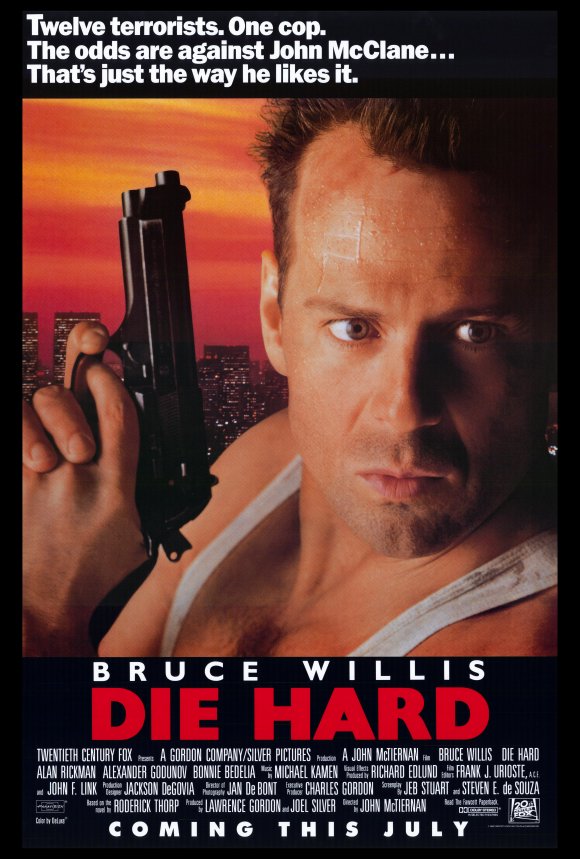
Produced by: Lawrence Gordon, Joel Silver, Beau Marks (associate) Charles Gordon (executive)
Written by: Steven E. de Souza & Jeb Stuart (screenplay)
Starring: Bruce Willis, Alan Rickman, Bonnie Bedelia, Reginald VelJohnson, Alexander Godunov
Music by: Michael Kamen
Based on the novel Nothing Lasts Forever by Roderick Thorp
Year: 1988
You wouldn’t know it today, but Bruce Willis wasn’t known for action roles back in 1988. Having spent most of his career up to that point being known for the dramedy detective series Moonlighting, where he played a wisecracking detective opposite Cybill Shepherd, Willis wasn’t necessarily the most obvious choice for the role of John McClane, despite the character sounding fairly similar as a wisecracking police officer from New York. It doesn’t seem like much of a stretch to modern viewers unfamiliar with the era, but when you consider the fact that the show featured a largely romantic story between two co-workers, putting the actor into a film like Die Hard, which, by the way, released only a year after his starring role debut in the romantic comedy Blind Date, maybe it makes more sense why people may have been a bit more skeptical. Read more…
Review: “Meet Me in St. Louis”
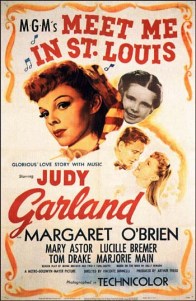 Directed by: Vincente Minnelli

Produced by: Arthur Freed
Written by: Irving Brecher & Fred F. Finklehoffe (screenplay), Sally Benson (story)
Starring: Judy Garland, Margaret O’Brien, Mary Astor, Tom Drake, Marjorie Main
Music by: Roger Edens (score) Hugh Martin, Ralph Blane, Arthur Freed, et al. (songs)
Based on the stories of Sally Benson
Year: 1944
While not strictly a Christmas movie in itself, Meet Me in St. Louis is often cited as one and, nonetheless, definitely teaches us to be in the holiday spirit all year round, as it centers around a lot of the traditional themes of mainstream Christmas: family, friends, love, and togetherness. Of course, despite featuring many other events over the course of a year, the film does ultimately feature its emotional climax around the Christmas season, and it is here that the film earns its status as a true holiday classic, if only because of what is arguably the film’s most lasting and famous contribution to the holiday, the song “Have Yourself a Merry Little Christmas.” Read more…

 The Viewer's Commentary