An Ode to Pooh: Melancholy Ramblings on the State of Hand-Drawn Animation
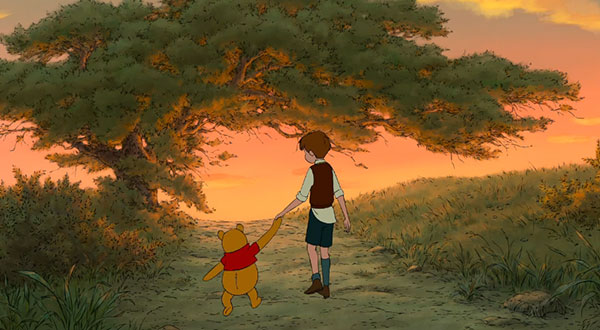
Pooh and Christopher Robin head off into the sunset.
It’s the question on the lips of every animation buff’s lips: Is hand-drawn animation on its way out? Let me get this out of the way, as you likely already know my perspective on the matter: I certainly hope that it isn’t.
As of this writing, I’m eagerly anticipating the release of the Blu-Ray release of Disney’s 70-year-old classic Dumbo, a movie I haven’t seen in probably over a decade — I can’t even remember the last time I did see it, in fact! But outside of film, animation, and Disney uber-fans, is there any truth to former Disney dictator Michael Eisner’s supposition that, much like black and white movies, these movies no longer appeal to general audiences?
Despite the franchise being a marketing dream, the box office performance of Disney’s latest animated feature, Winnie the Pooh, didn’t exactly make a great case for the idea that animated films of the traditional nature are all that profitable, taking in just $26.7 million in American theatres. That it just barely made back its $30 million budget when international grosses are factored in doesn’t exactly scream “Make more of these!” to corporate executives, either. Of course, these are the same guys who, paradoxically, seem to be too preoccupied with in-your-face 3D films now, despite that format’s own problems. Perhaps Pooh will sell like crazy on home release later this fall, as with the similarly-budgeted CGI Peter Pan knock-offs, the annual Tinker Bell series of straight-to-video releases. Then the question becomes whether studios should even bother with theatrical releases at all for these kinds of films!
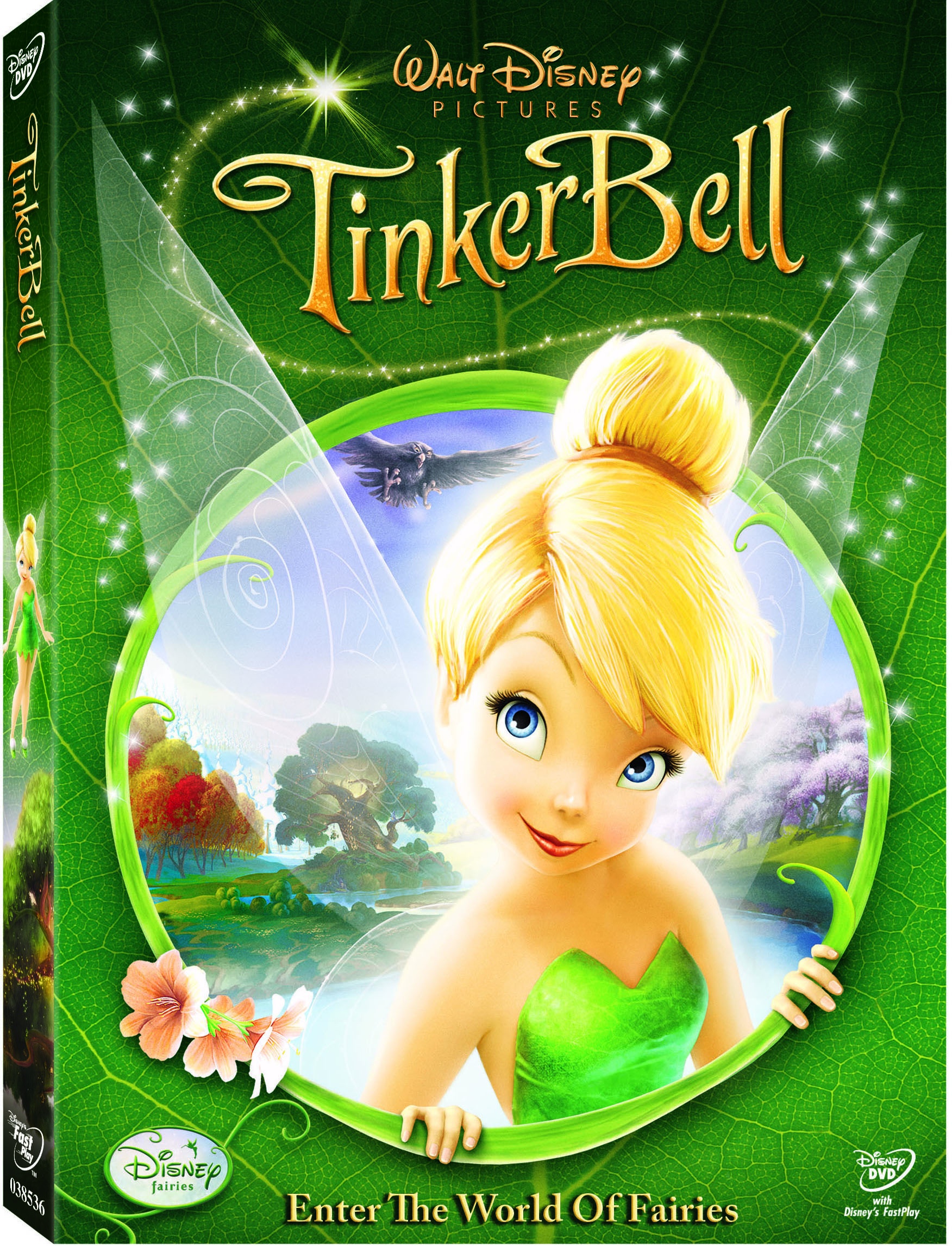
The model of success.
Pooh may have gotten a very high score with critics at a very deserving 91%, but the fact of the matter is that, critically, the first Tinker Bell release got a shockingly close score, too, at 88% (though with fewer reviews than Pooh). And, let’s be honest, critical ravings mean nothing if people aren’t spending money on the product. That Winnie the Pooh was any good at all is a miracle in itself after years of second-tier (though, yet again, surprisingly and increasingly well received) features like The Tigger Movie, Piglet’s Big Movie, and the recent movie’s theatrical predecessor, Pooh’s Heffalump Movie. Remember, though, that Tinker Bell and Pooh stand alongside this year’s biggest animated film, though arguably Pixar’s worst feature to date, Cars 2, as some of Disney’s biggest toy and merchandise movers. Honestly, Disney was probably expecting Winnie the Pooh, which actually stands alongside Beauty and the Beast, Dumbo, Tangled, and Aladdin as the 51st of their “canon” feature films, to perform better than it did, even despite being released between the final Harry Potter and Captain America.
This past weekend, however, brought a spark of hope for traditional animation. As this Cartoon Brew article points out, traditional animation is once again at the top of the box office — and it’s not even with a new release! In preparation for the film’s high-def home release in October, Disney has dressed up The Lion King‘s 2D animation with new 3D effects and re-released what is considered to be one of their best and best-selling films to theatres for a limited run; in just one weekend, it has managed to claim the top spot at the box office, earning $29.3 million! That’s right — a 17-year-old, traditionally animated film that’s about to be given a widespread home video re-release, now with arguably gimmicky new special effects that people actually pay extra for, has managed to make back nearly the entire budget of a more recently released peer! (Wait… 1994 was seventeen years ago!? Holy crap…!)
Sadly, I still see this as a minor victory. Unlike with Winnie the Pooh, the films that are out right now haven’t exactly been must-see for most audiences. There’s Contagion, which is properly peaking my interest. And then there’s Abduction, the biggest draw for wide audiences being the ability to watch Taylor Lautner play action hero while biding their time for the next Twilight film. The Help has been out a sufficient enough amount of time for people to start waiting for the home release if they haven’t seen it already. These could be decent enough films, but they’re no Harry Potter, Captain America, or Transformers, all of which released within the span of a couple weeks of Pooh, so what else is there really to see, especially for families, other than one of the most beloved animated films of all time?
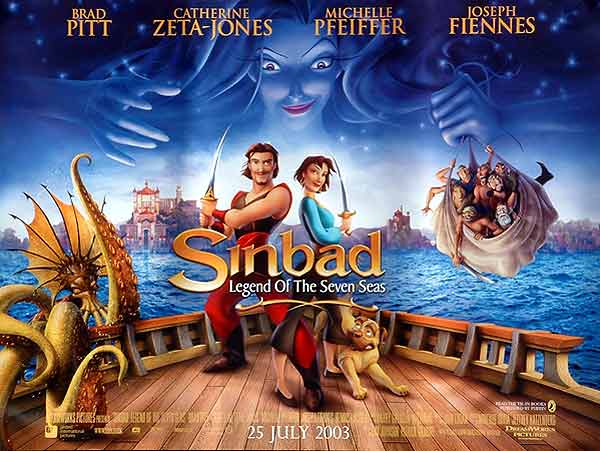
Apparently, this existed.
Plus, we haven’t even begun to examine other major animation studios. Pixar doesn’t really do hand-drawn outside of a few elements in their shorts and credits sequences, though John Lasseter is a huge proponent of the medium, so who knows what the future holds. Plus, that’s still a company within Disney, so it’s not exactly surprising, either. Pixar rival DreamWorks Animation hasn’t made a traditionally animated film since the long forgotten Sinbad, and has, since Shrek, gone on to delude itself into copying the same formulas over and over again, only to become known for making technically sound, though substantially mediocre CG films, with the occasional surprises like How to Train Your Dragon, a film which would have likely won the Animated Film Oscar if it weren’t for Toy Story 3. I still can’t believe they once held the record for making the most expensive animated film of all time with The Prince of Egypt, and yet they haven’t tried to re-release the film in any format since it first came out. I’d kill for a high-def transfer!
Another studio, Fox Animation, has similarly gone the same route as DreamWorks, and in roughly the same timespan, too, only with weaker results. They produced former Disney animator Don Bluth’s final two features, Anastasia and Titan A.E., before shuttering the company due to the latter’s dismal performance. They later revived the studio with the awful Ice Age films and Robots, with an acceptable adaptation of Horton Hears a Who! before going on to make a left field decision to release Wes Anderson’s surprisingly decent and incredibly indie film, The Fantastic Mr. Fox — a bizarre film that used a similarly endangered medium known as stop-motion animation, also known as claymation, or, to the ignorant, “movies that copied the style of Nightmare Before Christmas.”
If the recent history of traditionally animated films is any indication of a trend, then, at best, these films are likely to remain rarities in the theatres. Take a look at these two lists (1, 2) of animated films released in the US since 2001, and you’ll see that, after Disney very briefly retired their traditional animation with Home on the Range (2004), theatrically released films of this style quickly dropped off. The biggest of these films outside of Disney have since been from Studio Ghibli, the renowned Japanese studio known for producing My Neighbor Totoro, Spirited Away, Ponyo, and others. Aside from effects, they have never embraced 3D character models over the “flat” style they’ve always used. Take them away, and the biggest release of the past ten years was probably The Simpsons Movie in 2007, a film with a built-in audience of fans that had been waiting roughly 17 years for the chance to see the dysfunctional family on the big screen. The TV show was already in hot water for dropping in quality, and a move to 3D animation would’ve likely led to fan backlash, the likes of which hadn’t been seen since the introduction of Poochie to the Itchy & Scratchy shorts. (Now there’s a movie I’d like to see on the big screen!) Butyou know what? All of these movies did pretty well for themselves.
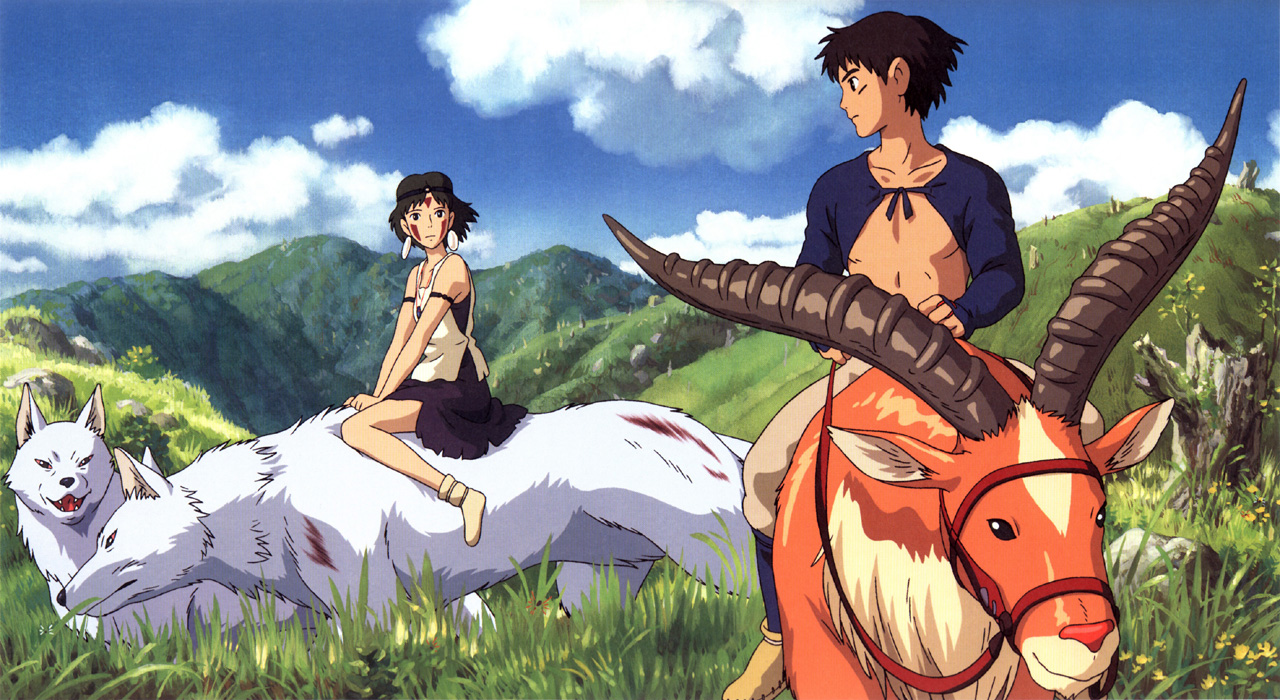
Studio Ghibli even branches out into the PG-13 territory with films like Princess Mononoke.
Luckily, as with claymation, it’s unlikely that this style will just go away. We can always look forward to lucky artists who manage to strike gold, as with gorgeously animated and Oscar-nominated films The Secret of Kells and The Illusionist. The medium will become a rarity, even within Disney, but, as with claymation, it’s a style that will never go away. In fact, it’ll likely become a marketing draw on its own, much like computer animation used to be. The agonizing wait for a new animated movie in the traditional style will make a film’s release a relatively major event and set the film apart from the rest. Filmgoers are arguably still used to seeing traditionally animated films to think of it in this way, largely thanks to the style’s continuing presence on television, but give it a generation or two, and you’ll likely see the novelty factor kick in and work in these films’ favor — at least financially. It’s a sad state of affairs, to be sure, but so long as people like John Lasseter and Studio Ghibli’s Hayao Miyazaki to encourage other animators to go back to this style, there’s little reason to believe that this medium will go away for good. … As long as studios don’t make the same stupid scheduling mistakes Disney made with poor old Pooh, that is!
Disclaimer: Please be aware that most, if not all, animation produced these days, including what is known as “traditional” animation, is often produced using the same computers that “CGI” films are produced on and are no longer actually “painted” in a “traditional” sense as they once were. Nonetheless, I used the terms “traditional” and “CGI/CG” in a “traditional” sense for clarification’s sake. The fact remains that “tradtional” animation as “traditionally” understood refers to a “hand-drawn” style, while “CG” is a term that refers to films “rendered” using “polygons” and not using “cels.”

 The Viewer's Commentary
Awesome commentary! I think it would be awesome to see 3D animation remakes of all the Disney classics. I would definitely go see those. I’m looking forward to see your upcoming posts!
Thanks, Dave! However, I’m not so sure I’d be too supportive of 3D remakes of traditional films. It’d be an interesting experiment, I guess, but, as the saying goes, why bother fixing what wasn’t broken in the first place? The 3D effects that Disney has added to The Lion King, as well as the even more limited run of Beauty and the Beast, aren’t exactly akin to remaking the film in 3D as much as it is to pushing the existing animation outward to give the illusion of depth — something that I’m still not convinced is wholly necessary since the original artists did a good enough job conveying that depth in their artwork in the first place! It brings back memories of my parents complaining about the colorization process back in the ’90s. It’s not making it “better.” It’s just making it different. … In my opinion, of course!